
Birding, Cranes & Hummingbirds in Rockport-Fulton
The Coastal Bend is one of the great birding regions in North America — coastal marsh, oak mottes, and the bays sit on a major migration corridor. But Rockport-Fulton's birding identity has three specific draws, and this guide is built around them: the whooping cranes, the year-round depth, and the hummingbirds.
The whooping cranes
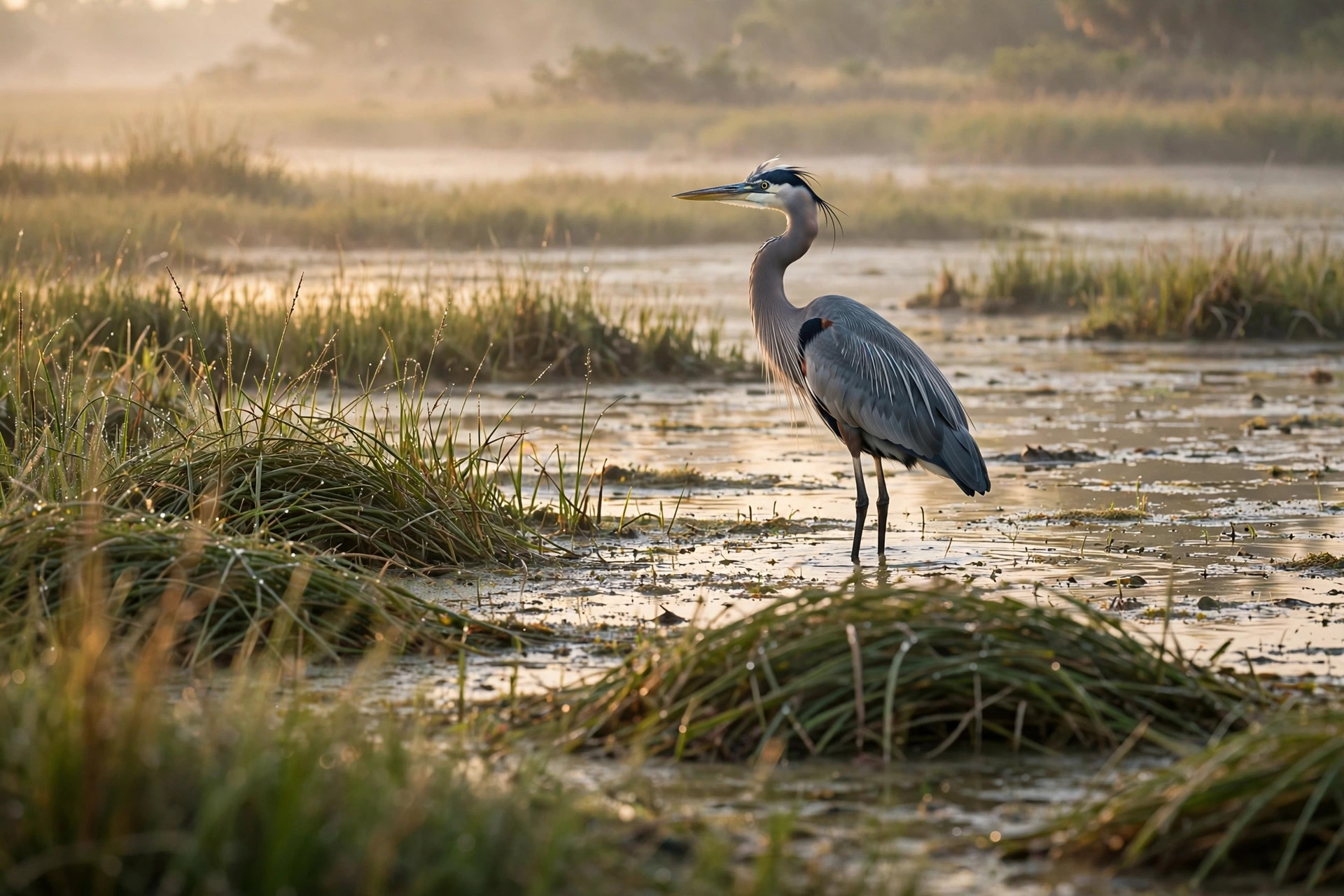
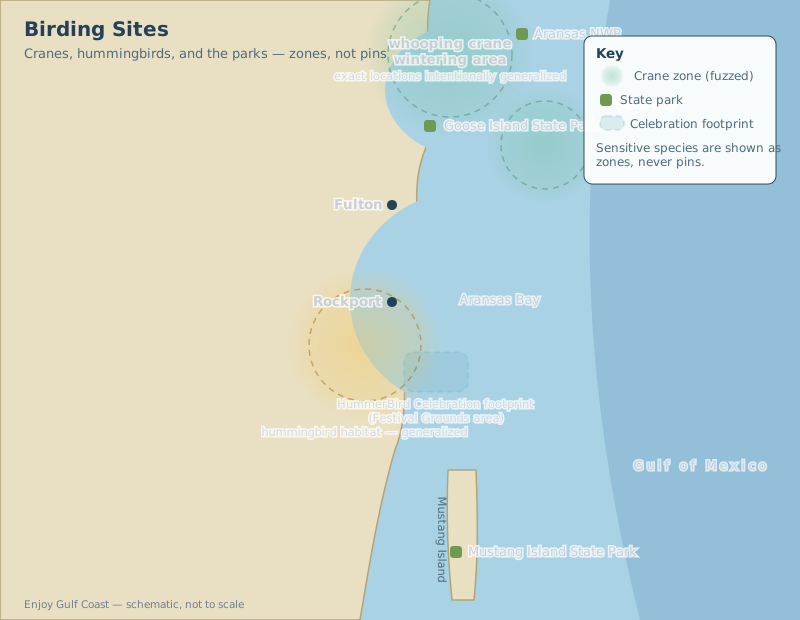
The whooping crane is the tallest bird in North America and one of the rarest — and every winter, the wild flock comes home to the Aransas National Wildlife Refuge, just across the bay from Rockport-Fulton. The refuge is not in Rockport — it's a separate federal refuge, reached by road around the bay or by water — and we never imply otherwise.
A rule we take seriously: we publish crane viewing zones, not precise pins. The birds are sensitive to disturbance, and exact locations shift. If a source gives us a specific roost location, we fuzz it — the zone is public, the pin is not. Observation reports elsewhere on this site are labeled and decayed by date; a crane sighting from last month is not a crane sighting today.
When: the cranes winter here, roughly late fall through early spring. Boat tours out of the Rockport-Fulton harbor are the classic viewing method — from the water, with distance and a guide who knows the birds' habits. We don't name tour operators here without verification; verified operator records live in our data store.
What you'll actually see: cranes on the marsh flats at dawn and dusk, feeding and dancing displays in season, and — if you're lucky and quiet — close enough to count bands. Bring a scope or long lens. Keep your distance. These are wild birds, not an exhibit.
Year-round birding
The cranes are the marquee, not the whole show. Goose Island State Park, the oak mottes along the coast, and the marsh edges hold herons, egrets, roseate spoonbills, pelicans, hawks, warblers, and shorebirds across the year — with spring and fall migration as the peak seasons.
Goose Island State Park ($5 adult / free 12 and under, daily 6am–10pm, reservations recommended when busy — TPWD, time-sensitive) includes the Big Tree, the State Champion Coastal Live Oak — TPWD calls it centuries old. We don't publish the "1,000 years" figure that floats around non-authoritative copy; TPWD doesn't support it, so neither do we.
Birding and fishing share the same access points: the piers and shore entries in our fishing records are also dawn birding spots. Plan accordingly.
Hummingbird Season {#hummingbird-season}
Rockport-Fulton has a distinct hummingbird identity — not a footnote to general birding, but its own season and its own reason to visit. Ruby-throated hummingbirds pass through the Coastal Bend in numbers during migration, and the town has built a genuine culture around them: feeders, gardens, and a celebration that draws people from across Texas.
When: migration windows — spring (roughly March–May) and fall (roughly August–October). Exact timing shifts with weather and the year; hummingbird season timing is one of our active verification items. The details of the current year's movement live in our records and on the Tonight/events surfaces when timed events are involved.
The HummerBird Celebration is Rockport-Fulton's hummingbird festival — an EVENT object in our calendar, with verified individual occurrences rather than assumed recurrence. When it's on, it's the town's signature birding weekend, drawing hummingbird enthusiasts from well beyond the county. When dates are confirmed for an upcoming instance, you'll find them on the events calendar, not as a guess here.
Where to go: gardens, feeders, and hummingbird-friendly sites around town. We name zones, not private feeders — and we don't publish private-property birding spots without permission.
Planning your birding trip
- Best light is early. Dawn on the marsh is where the day is decided.
- Season matters more than spot. Migration windows beat perfect locations out of season.
- Distances: the refuge is a drive from town, not a walk. Plan the day around one side of the bay or the other.
- Pair it: birding mornings + Fulton Mansion afternoons is the classic bad-weather and slow-day combination — both are calm, both reward patience.